Home › Utilities › Commander One PRO

Commander One PRO 3.18.0 (Mac)
Updated
The catalogue note
Commander One PRO 3.18.0 brings improved compatibility with macOS 27, fixing drag and drop and hotkey handling on non-English layouts. If you're considering commander one pro full mac setup, the first question is whether it runs on your machine.
Requirements first
The app needs macOS 10.13 or later, runs on both Intel and Apple Silicon, and takes 52.82 MB of free space. It's written in Swift, which keeps it tight on resources. Interface languages include English, German, Polish, Spanish, and ten more.
Dual-pane Finder alternative with FTP, cloud storage, and iOS device browsing
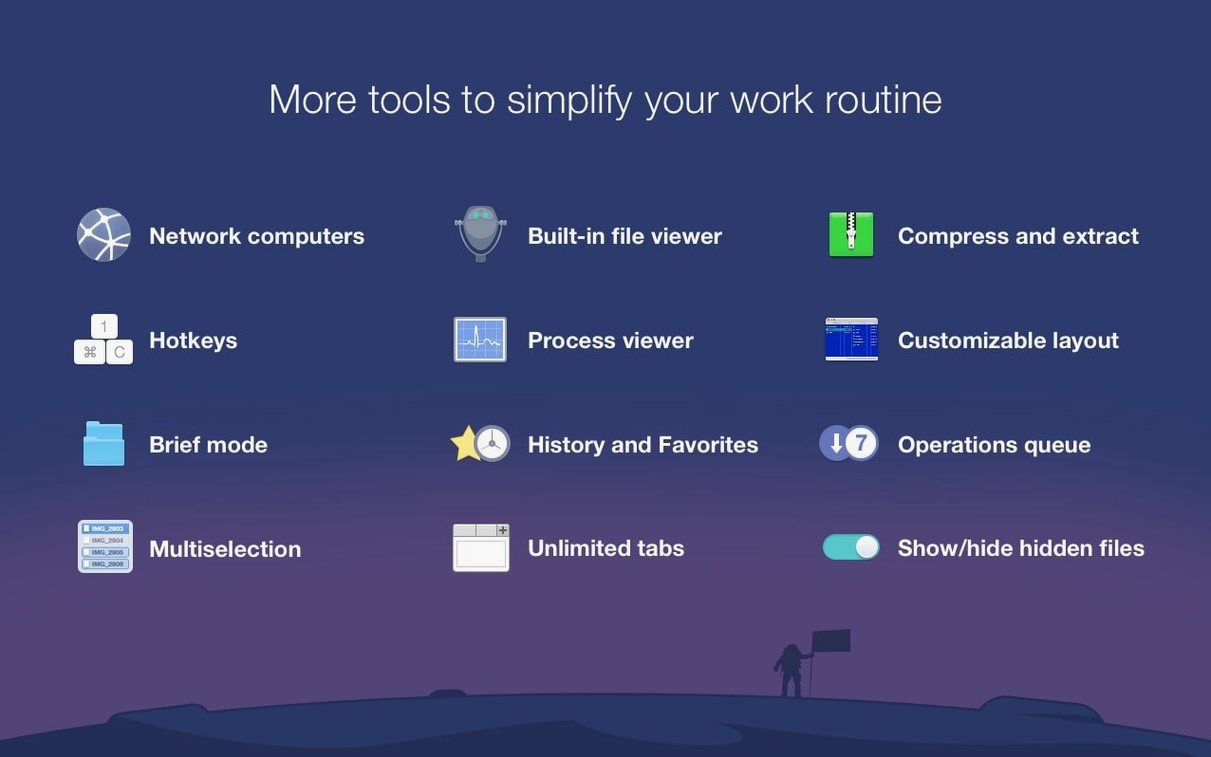
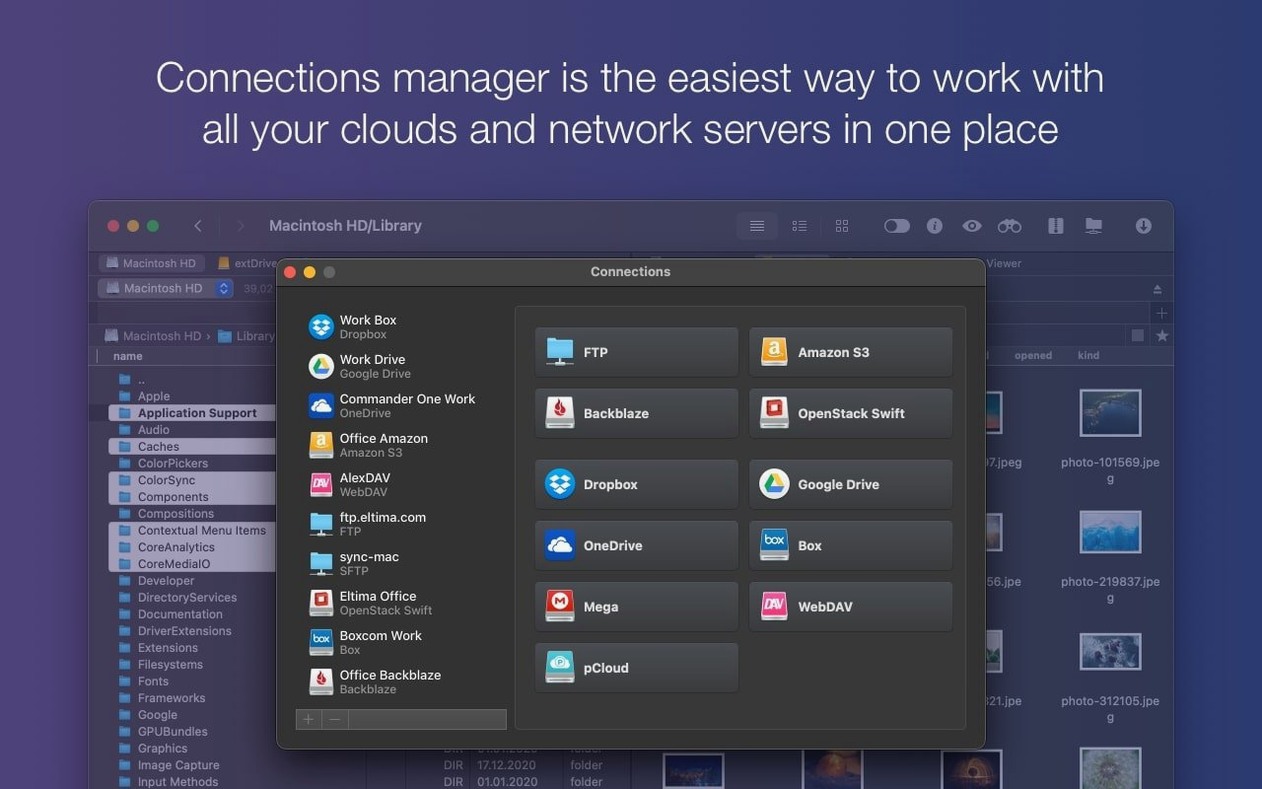
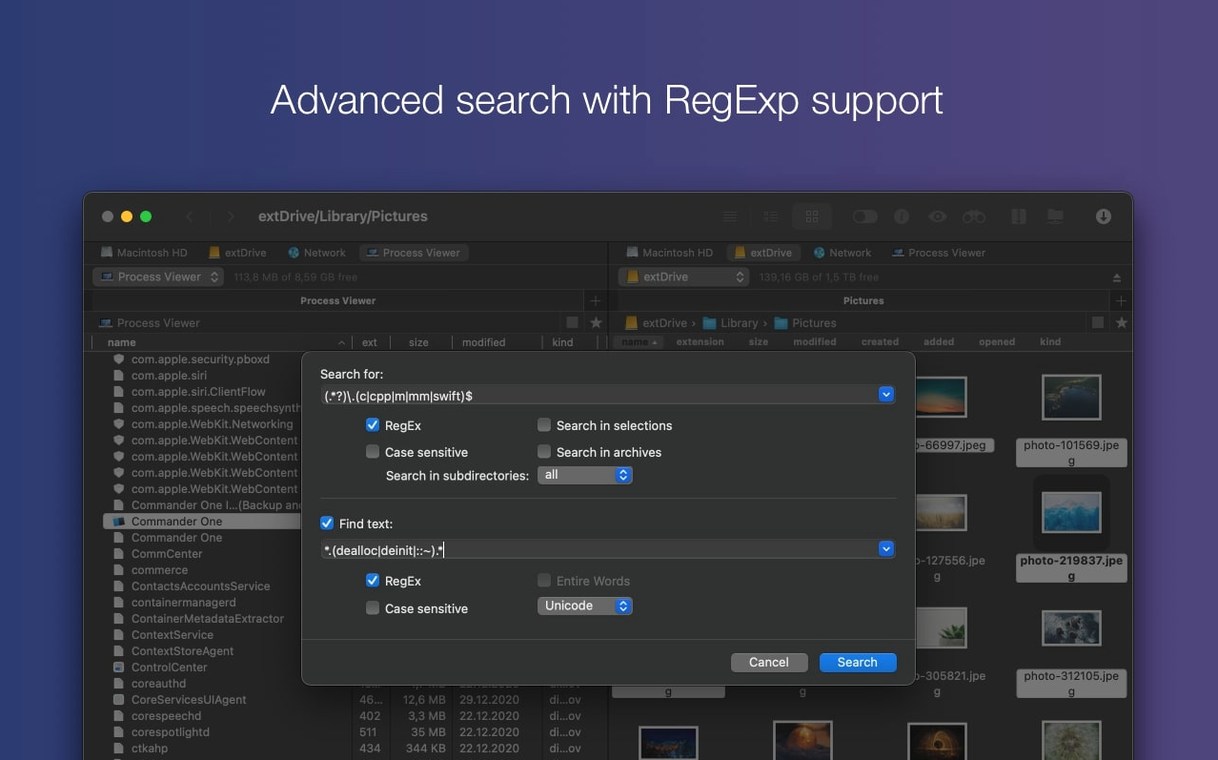
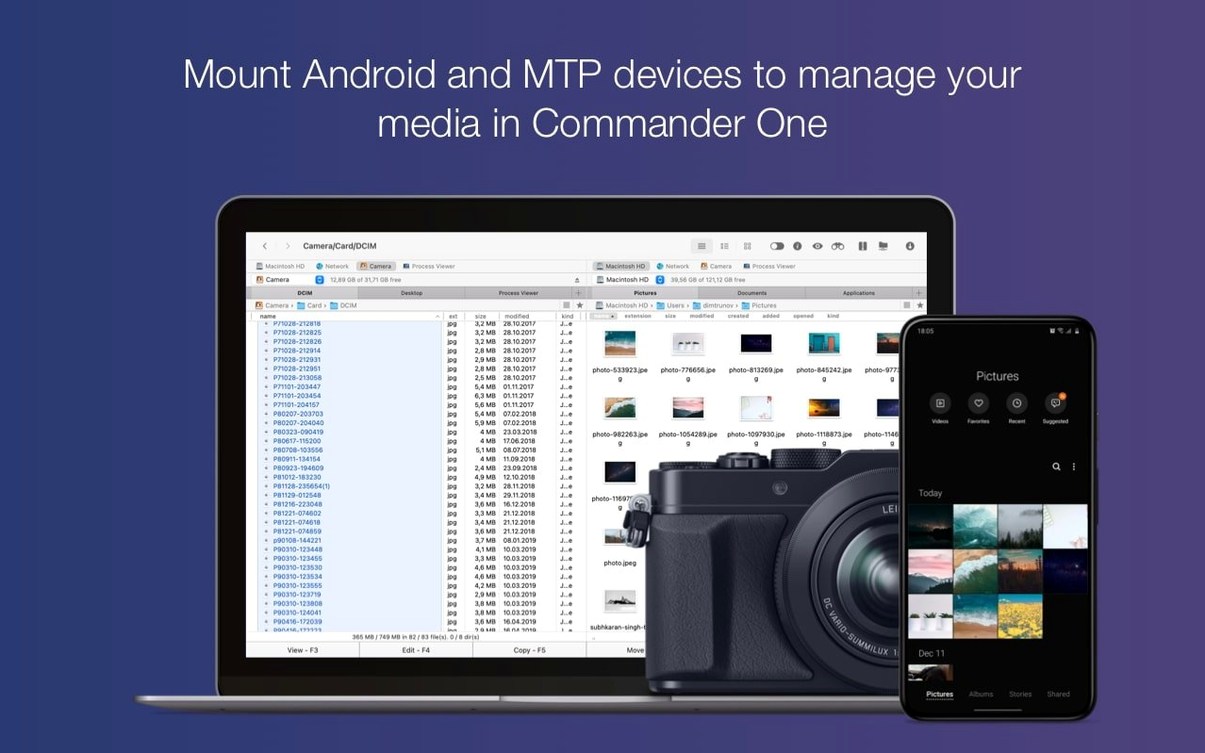
As a dual-pane Finder alternative, it handles FTP, Amazon S3, and cloud storage. You can browse iOS, MTP, and Android devices, search with regular expressions, and use the Process Viewer to monitor active processes. Brief Mode helps when dealing with many files at once.
Workflow: mounting the disk image
- Mount the downloaded disk image and launch Open Gatekeeper friendly.
- Press Enter in the Terminal window to bypass Gatekeeper.
- Drag the app into the Applications folder.
- Launch Commander One PRO from Applications.
Launches on High Sierra and later with a 52 MB footprint
Given the listed requirements, Commander One PRO 3.18.0 should launch on any Mac from High Sierra onward. The 52.82 MB footprint means it won't compete for space with sample libraries or session backups. The dual architecture binary covers both Intel and Apple Silicon machines, so there is no Rosetta dependency to worry about on newer hardware. The Process Viewer gives you a live look at what the system is doing, which can be useful when you're juggling multiple transfers and want to see what's eating CPU.
Gatekeeper bypass step in Terminal catches users off guard
The Gatekeeper bypass step during installation catches people off guard. If the app refuses to open after dragging it to Applications, revisit the Terminal step: make sure you pressed Enter after the command appears, and that the disk image is still mounted. Some users report that macOS Ventura and later require allowing the app in System Settings > Privacy & Security after the Terminal step, so check there if the launch fails.
FTP connections sometimes fail because the remote server uses a passive mode setting that differs from the app's default. Switch between active and passive FTP modes in the connection settings to match your server. For cloud accounts, ensure your Dropbox or Google Drive credentials are current — expired tokens produce a silent failure rather than a clear error message. If Brief Mode doesn't display as expected, verify you haven't accidentally toggled a column sort that collapses the view.
Hotkey issues on non-English keyboard layouts were addressed in version 3.18.0, but if you still encounter unresponsive shortcuts, check that no system-wide utility is intercepting the same key combinations. The app's own preferences let you reassign most commands.
Process Viewer and regex search set it apart from ForkLift
ForkLift is probably the closest alternative among dual-pane file managers for macOS. Both support FTP and cloud storage, but Commander One PRO's inclusion of the Process Viewer and regular expression search gives it an edge for users who need system monitoring alongside file management. ForkLift's interface is slightly more polished out of the box, whereas Commander One PRO feels more utilitarian — a trait that some studio engineers prefer when they want tools rather than chrome.
Transmit by Panic focuses almost entirely on remote connections. It excels at FTP and S3 transfers but lacks the dual-pane local file management and the ability to browse connected iOS or Android devices. If your workflow involves moving files between a Mac and a phone or tablet regularly, Commander One PRO covers that scenario where Transmit does not.
Cyberduck is free and handles cloud storage well, but it is a single-pane browser, not a full file manager. You cannot view two folders side by side or use Brief Mode. For users who want a Finder replacement rather than just an upload tool, Commander One PRO is the more complete package.
Client folder on external drive in left pane, FTP archive server in right pane
I start the day with a client's session folder on an external drive in the left pane and the studio's archive server connected via FTP in the right pane. The dual-pane layout lets me see both locations at once. I select the raw audio files in the left pane, hit Command+C, navigate to the right pane, and paste them directly onto the server — no intermediary Finder window, no dragging across spaces.
Midway through, I need to check whether a particular take exists on an old Android tablet the client brought in. I connect the tablet via USB, and Commander One PRO mounts it in the device browser without any additional software. I search for the filename using a regular expression because the client only remembered part of the name. The search finds it in seconds.
Before wrapping up, I spot a process that is using more CPU than expected. I open the Process Viewer from the toolbar, identify a stuck helper tool, and force quit it without leaving the app. I then compress the session's backup files into a 7z archive using the built-in archive tool — no need to open The Unarchiver separately. The session ends with the cloud sync completing in the background via the Google Drive pane I left open. Commander One PRO provides a reliable dual-panel file manager for macOS users who need FTP, cloud storage, and archive support.
Once it's running, you'll notice the dual-pane layout makes file transfers and folder comparisons more direct than Finder's single window approach.
Changes in this build
- Improved compatibility with macOS 27.
- Fixed drag and drop of files on macOS 27.
- Fixed handling of some hotkeys with non-English keyboard layouts.
Before it goes on the Mac
- macOS 10.13 or later
- Intel or Apple Silicon
- 52.82 MB of free space
Installing it on the Mac
- Mount the disk image and launch Open Gatekeeper friendly.
- Press Enter in the Terminal window to bypass Gatekeeper.
- Drag the app into the Applications folder.
- You're done — the app is ready to use.
Notes from the control room
Sign in or open a catalogue account to leave a note.
No notes from the room yet. If you have used this build for a week, a short note helps the next person.