Bitwig Studio 6.1 (Mac)
Updated
The catalogue note
Bitwig Studio 6.1 runs on any Mac from macOS 12 Monterey upward, and it works on both Intel and Apple Silicon machines. That covers most studio Macs still in service, which is a relief when you are mid-project and don’t want to think about hardware compatibility.
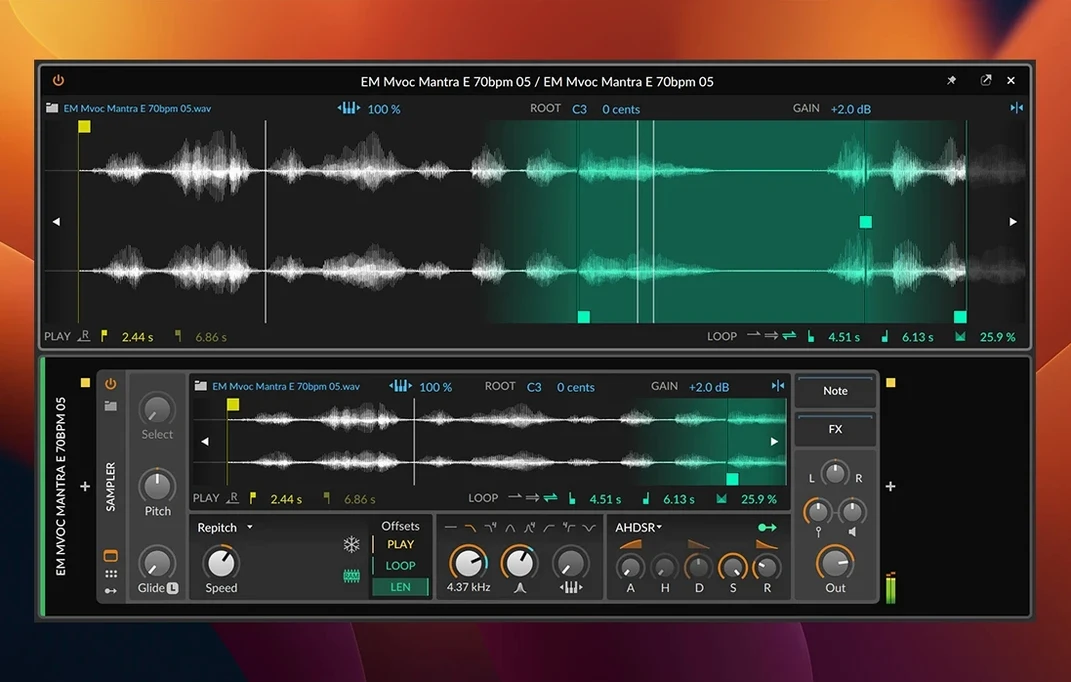
The headline change in 6.1 is the Sampler. It now slices audio, and the new Spectral and Fragments play modes open up sample manipulation that used to require third-party tools. Slicing is straightforward: drop a break, set the slice points, and you are ready to trigger or re-sequence. The Spectral mode lets you stretch and reshape timbres in ways that feel almost surgical.
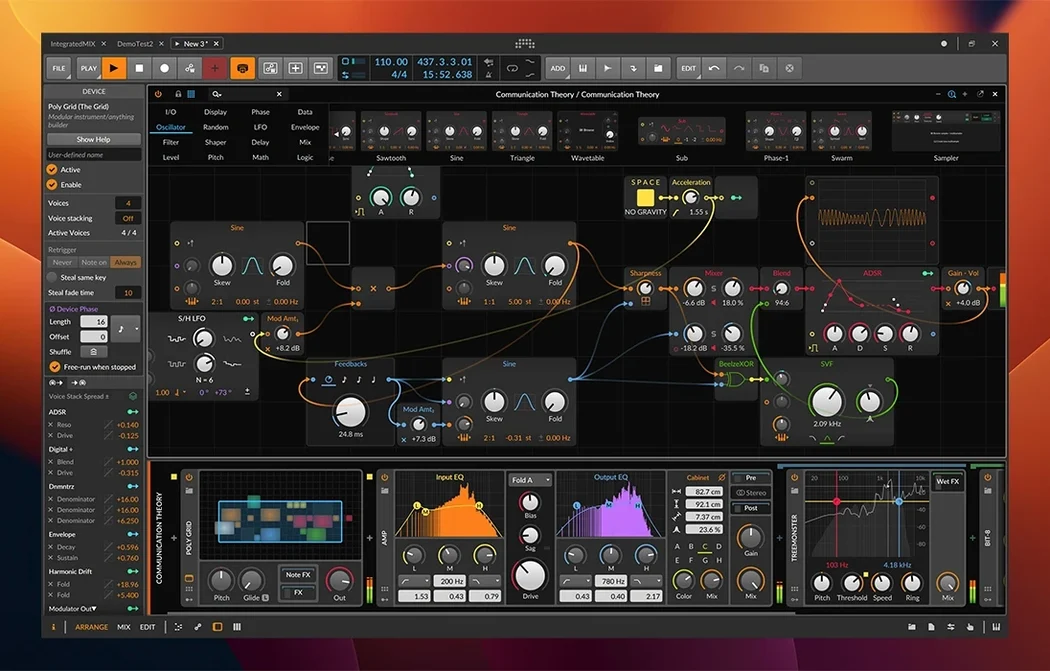
Bitwig has always been strong on composition and performance, and the three workspaces — Arrange, Mix, and the modular Grid — can run side by side on separate monitors. The interface is customisable, so you can strip it down to what you actually need. There are more than 80 built-in devices and effects, microtonal editing, and MPE support, so it covers everything from conventional mixing to experimental tuning systems. The time-stretching engine handles tempo changes without obvious artefacts.
Version 6.1 also adds automatic tempo and pitch detection, which saves time when you import loops or field recordings. Bitwig Studio is a digital audio workstation for composing, recording, and live performance, not a bitwig studio crack.
Tweak audio device settings and external hardware workflow first
Out of the box, Bitwig Studio runs with a sensible default configuration, but a few tweaks will save you time if you work with external hardware or prefer a particular workflow. The audio device settings are the obvious starting point — set your buffer size to something reasonable for your interface and project complexity. 128 samples is a common middle ground for tracking; 256 or 512 for heavier projects with many plugins.
If you use the Clip Launcher for performance or sketching, enable Launch Quantize and set it to 1 Bar or 1 Beat depending on how tight your trigger finger is. This stops clips from starting mid-phrase when you hit a pad a fraction too late. The quantise value lives in the Transport panel, not buried in a menu.
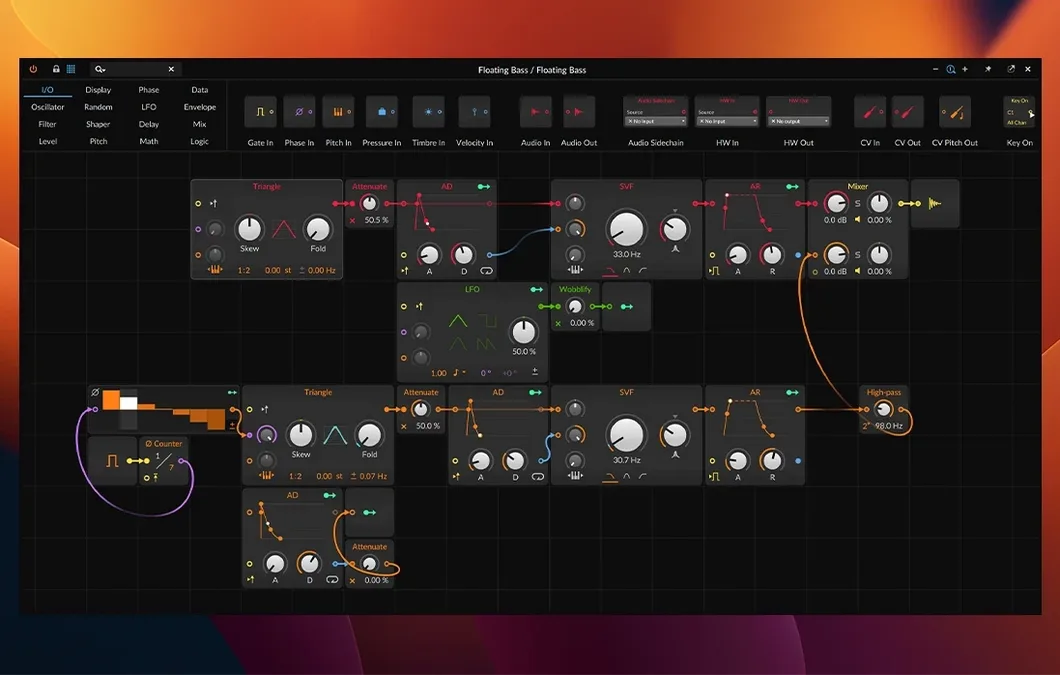
Another early stop: the Grid’s default patch structure. When you open the Grid for the first time, it shows a basic voice chain. Save a template with your preferred bus routing, polyphony limit and modulation sources so you aren’t rebuilding it every session. The same applies to the Sampler — after you set up your default slice mode or play mode, save it as a preset.
Finally, check the Midi preferences tab. If you use controllers that send aftertouch or MPE, make sure the correct input is enabled and that the MPE zone is set to match your controller’s range. The default zone is usually fine, but the LinnStrument and Seaboard sometimes need a manual assignment.
Locks to other apps via MIDI clock and Ableton Link
Bitwig Studio does not live in isolation. It sends and receives MIDI clock and Ableton Link, so it locks to other Link-enabled applications on the same network — great for jamming with someone running a tablet synth or another DAW on a second machine. No extra sync box required.
On macOS, Bitwig handles Audio Units and VST3 plugins natively. If you keep a library of AU effects or instruments, they appear in the browser alongside Bitwig’s own devices. The browser indexes plugin locations, so you do not need to copy files into a specific folder. Just point it at your usual /Library/Audio/Plug-Ins or ~/Library/Audio/Plug-Ins paths and it picks them up.
Core Audio drivers mean your audio interface appears automatically in the audio settings. Aggregate devices work too — you can combine an interface’s outputs with the Mac’s built-in headphone jack for separate cue mixes without extra hardware. This is handy for podcast-style setups where the guest needs a separate headphone feed.
For screen management, the three workspaces (Arrange, Mix, Edit) can each be assigned to a separate display. On a MacBook with an external monitor, you might put the Mix view on the big screen and keep the Arranger on the laptop panel. The window layout is saved per project, so it remembers your monitor arrangement when you reopen a session.
Use modulators instead of automation lanes for faster control
- Ignoring the modulator panel. Bitwig’s modulation system is not hidden, but newcomers often reach for automation lanes instead of using the built-in modulators. LFOs, envelope followers and note expressions can modulate almost any parameter without writing automation data. It keeps the arranger clean and makes modulation changes much faster to audition.
- Overlooking the three workspaces. People open the Arranger and stay there, missing the fact that the Mix workspace gives you a proper console-style mixer with inserts, sends and a master section. The Edit workspace shows clip-level details without leaving the Arranger context. Using all three reduces clicks.
- Not saving default templates. Bitwig loads with a basic track setup. If you always start with two audio tracks, a MIDI track and a bus, save that as your default project template. Every new project then begins with your routing already in place. This is a one-minute fix that beginners skip for months.
- Forgetting to set clip launch quantise. As mentioned above, without quantise, clips in the Launcher start the instant you press the trigger. In a live situation, this can sound sloppy. New performers often blame the controller when the setting is simply off.
Fix audio crackling by raising the buffer size
Audio dropouts or crackling. The usual culprit is a buffer size set too low for the current project’s plugin load. Increase it in the audio preferences. If the problem persists, check whether you have any third-party plugins that are not fully compatible with Apple Silicon — Bitwig runs natively on both architectures, but a plugin running under Rosetta can introduce latency spikes. Use the plugin manager to see which ones are bridging.
MIDI controller not recognised. The controller may be sending on a MIDI channel that Bitwig’s active track is not listening to. Open the MIDI preferences and confirm the device is enabled. Then check the track’s input routing — it should match the controller’s output channel. For MPE controllers, ensure the MPE zone is set to the correct channel range (usually 1–16 for full MPE).
Sampler slices not triggering as expected. If you drop a loop into the Sampler and the slices do not line up with the transients, the auto-slice algorithm might be set too sensitive or not sensitive enough. Adjust the slice sensitivity slider in the Sampler’s slice panel. You can also drag slice markers manually. The Spectral and Fragments play modes ignore traditional slicing entirely, so if you want a straightforward chopper, stick to the Classic slice mode.
Tempo detection giving odd results. The automatic tempo detection in 6.1 works on most material, but very short loops or recordings with no clear transient can produce a wrong guess. In that case, tap the tempo manually or enter a known BPM value in the transport bar. The pitch detection has a similar limitation — monophonic sources are detected more reliably than dense polyphonic mixes.
Project file not opening on another Mac. If you move a project between machines and some plugins are missing, Bitwig shows a missing-plugin dialog. You can either replace them with equivalents or keep the project as-is and work around the gaps. This is not a Bitwig bug — it is the reality of any DAW when the plugin set differs. The same applies if you are using a bitwig torrent or bitwig studio torrent — the project might reference plugins not present in the downloaded version. Keeping your plugin folder consistent across machines prevents this.
CPU meter hitting the ceiling. Bitwig’s mixer runs each track’s processing chain independently, so a single heavy plugin on one track can push the meter high. Use the track freeze function to render that track’s audio to a temporary file, which disables its plugins until you unfreeze. The freeze button is on each track header in the Mix workspace. Alternatively, bounce the track to audio and disable the original.
Changes in this build
- Updated Sampler with slicing and two new play modes: Spectral and Fragments.
- Automatic tempo detection added.
- Automatic pitch detection added.
Before it goes on the Mac
- macOS 12 Monterey or newer
- Intel or Apple Silicon
Installing it on the Mac
- Follow the included installation and activation instructions.
Notes from the control room
Sign in or open a catalogue account to leave a note.
No notes from the room yet. If you have used this build for a week, a short note helps the next person.