
Home › Logic Pro Plugins › Arturia V Collection 11 Pro
Arturia V Collection 11 Pro 2025.20.26 (Mac)
Updated
The catalogue note
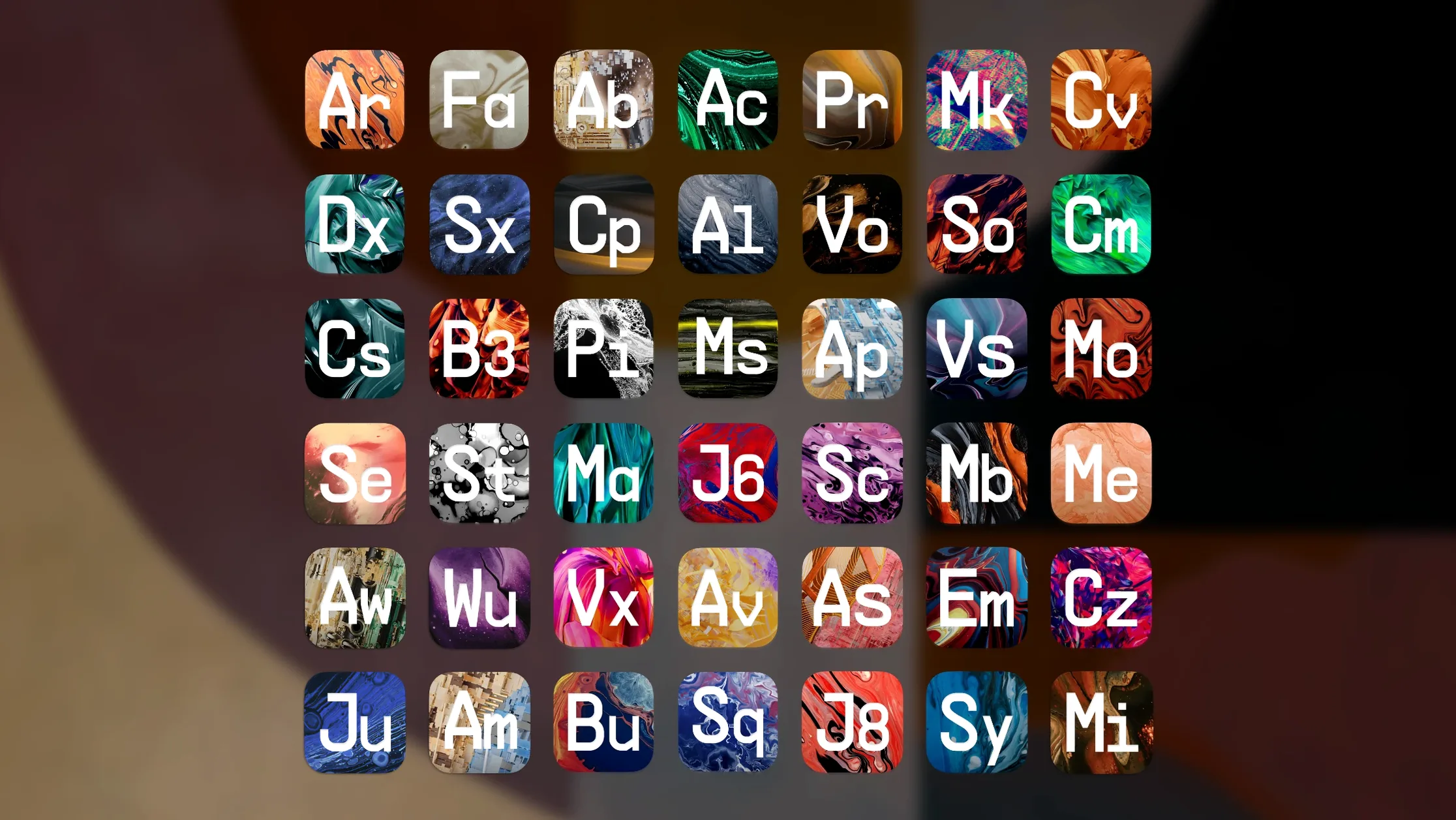
Arturia V Collection 11 Pro runs on any Mac from macOS 11 upwards, on both Intel and Apple Silicon. The current build, version 2025.20.26, brings the suite to 45 instruments, each available as Audio Unit, VST, VST3, and AAX. That covers Logic, Pro Tools, Cubase, Ableton Live, and most other hosts.
V Collection 11 Pro — the full Arturia software-instrument line, focused on synths and keyboards from the 1960s to the 1990s.
Jup-8000 V — a modern take on the classic Jupiter sound, with two layers and a deep modulation matrix.
Synthx V — a polyphonic synth inspired by the Roland SH-101, but with extended voicing and effects.
MiniBrute V — the software version of Arturia's own monosynth, with its distinctive brute factor.
SEM V — a faithful recreation of the Oberheim SEM, including the original filter character.
Pure LoFi — a tool for degraded, lo-fi textures, with built-in echo, reverb, and modulation.
Beyond those, you get Mini V, MS-20 V, CS-80 V, Prophet-5 V, Jup-8 V, and Vocoder V, among others. Every instrument includes effects like echo and reverb, plus flexible modulation options. Interface language is English, and control assignment is straightforward — click, move, assign.
Seven new instruments expand the browser to 45
Version 2025.20.26 adds seven new instruments to the suite. In practical terms, that means the browser now lists 45 instruments instead of 38. The preset menu and the search field behave the same way, but there is more to browse. If you already owned V Collection 10 or an earlier build, the main shift is the expanded sound palette, not a redesigned interface.
The new additions change the workflow in specific ways. Jup-8000 V gives you a two-layer architecture that works well for stacking sounds without leaving one instance. Synthx V extends the monosynth range with polyphony, which changes how you approach bass lines and leads in the same patch. Pure LoFi sits outside the vintage-recreation category; it is a dedicated lo-fi tool with its own character, useful when you want to avoid processing a clean signal through external plugins.
MiniBrute V and SEM V fill gaps that earlier collections left open — a software version of Arturia's own monosynth and a dedicated Oberheim SEM emulation. For anyone who works with subtractive synthesis daily, these two reduce the need to reach for third-party alternatives.
Analog-era synth sounds for electronic, pop, and scoring
Music producers working in genres that lean on analogue-era synths — electronic, pop, film scoring, ambient — will find the collection most useful. The 38 modelled instruments cover the classic hardware that defined those sounds. The seven new instruments extend that range without drifting into purely software-only territory.
Keyboard players who record MIDI parts rather than playing live hardware will benefit from the consistent interface across all instruments. Once you learn the modulation routing and effects section on one synth, the same layout applies to most of the others. That cuts down on menu-diving during a session.
Sound designers who need a large library of starting points will use the 12,000-plus presets. The search and tagging system lets you narrow down by instrument type, character, or style. It is not a replacement for building patches from scratch, but it saves time when you need a specific texture quickly.
Composers working to picture may appreciate the range of tonalities — from clean Juno pads to gritty MS-20 bass. Having all 45 instruments in one suite means fewer plugin vendors to manage and less time spent loading different instances during a cue.
Plugins not showing up after install
Plugins not showing up in the host. After installation, restart your DAW. If the instruments still do not appear, check that the plugin formats you need are enabled in the Arturia Software Center. Some hosts scan only specific formats — for example, Logic reads Audio Unit but not VST. Re-scan the plugin list in your DAW's preferences.
Presets loading silently. This usually happens when the instrument's output is routed to a mixer channel that is muted or has no audio path. Check the instrument's master volume and confirm that your DAW's track is receiving MIDI on the correct channel. Also verify that the plugin's internal effects are not bypassed by default.
High disk usage during loading. The suite requires 50 GB of free space. If you installed on a nearly full drive, loading large sample-based instruments such as the Augmented series may be slow. Moving the library to an external SSD and pointing the Arturia Software Center to the new location resolves this.
Activation issues after macOS updates. Arturia's activation is tied to the machine's system ID. A major macOS upgrade can change that ID. If an instrument asks for reactivation, open the Arturia Software Center and re-authorise the product. No internet connection is required once the initial activation is complete, but re-authorisation does need a connection.
Runs as Audio Unit, VST, VST3, or AAX in any DAW
V Collection 11 Pro works as a plugin inside any DAW that supports Audio Unit, VST, VST3, or AAX. That covers Logic Pro, Ableton Live, Cubase, Pro Tools, Studio One, and Digital Performer. The instruments also run in standalone mode via Arturia's own application, which is useful for sketching ideas without opening a full DAW.
The suite integrates with macOS Core Audio and Core MIDI without extra configuration. Plug a USB controller keyboard, select it in the instrument's MIDI settings, and play. On Apple Silicon Macs, the plugins run natively — no Rosetta translation needed, which keeps latency low in real-time monitoring situations.
If you use other Arturia products, the preset browser and the Arturia Software Center unify management across the whole catalogue. The same activation and update process applies to V Collection, Pigments, and any FX Collection plugins. That reduces the number of separate installer utilities on your system.
For users who route audio through tools like Rogue Amoeba's Loopback or Soundflower, standalone instances of the V Collection instruments can be patched into those virtual audio devices. This makes it possible to play the synths in real time alongside other macOS applications, such as live-streaming software or notation programs, without opening a DAW.
Changes in this build
- Adds 7 new instruments, including Jup-8000 V, Pure LoFi, Synthx V, MiniBrute V, and SEM V.
- Expands the suite to 45 instruments.
Before it goes on the Mac
- macOS 11 or later
- Intel or Apple Silicon
- 8 GB RAM
- 50 GB free disk space
- OpenGL 2.0 compatible GPU
- 4-core CPU or M1 CPU
Installing it on the Mac
- Install the software package included in the archive.
- Follow the included instructions for installation and activation.
Notes from the control room
Sign in or open a catalogue account to leave a note.
No notes from the room yet. If you have used this build for a week, a short note helps the next person.
Also filed under Logic Pro Plugins
The whole Logic Pro Plugins rack Arturia FX Collection2026.02 Logic Pro Plugins 16.1 GB
 Arturia Efx AMBIENT1.0.0 Logic Pro Plugins 285 MB
 BABY Audio Crystalline1.5 Logic Pro Plugins 107 MB
 Ample Sound Ample Guitar LP III4.0.1 Logic Pro Plugins 9.2 GB
 Bogren Digital Ampknob BDE 1201.0.246 Logic Pro Plugins 325 MB
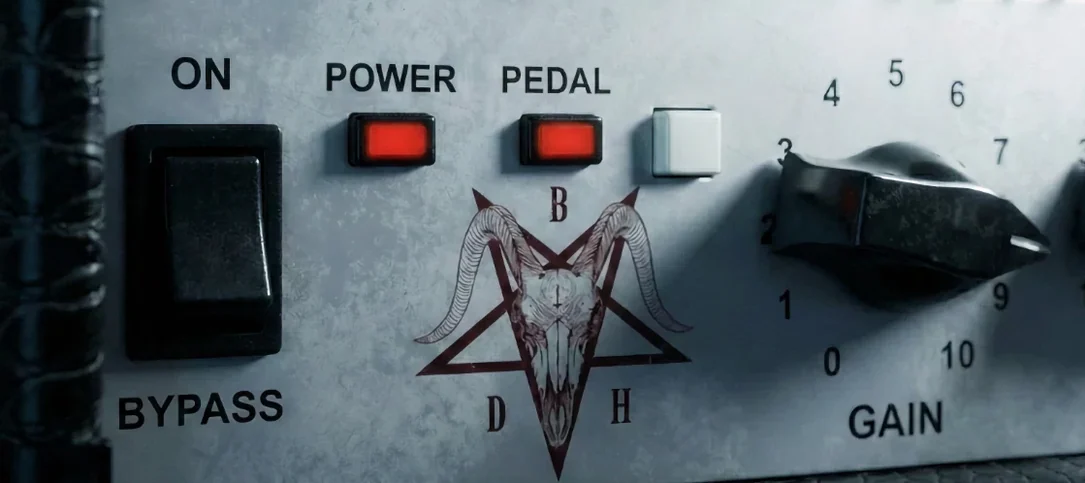 Bogren Digital Ampknob BDH 66o6 Plus1.2.118 Logic Pro Plugins 253 MB
 Bogren Digital Ampknob BH41.0.138 Logic Pro Plugins 280 MB
 AIR Music Technology Hype1.2.1 Logic Pro Plugins 801 MB